he confirmation came at 6pm BST on Monday, 28 May 2018. Liverpool sign Fabinho from Monaco for £43.7 million, a fee that felt almost understated given the Brazilian’s pedigree. I remember scrolling through the club’s official announcement—a short video of a beaming Fabinho holding a red shirt—and thinking: this isn’t a panic buy. It’s a surgical strike. While the world fixated on Nabil Fekir’s collapsed medical。Liverpool quietly secured the kind of defensive midfielder they’d lacked since Javier Mascherano’s departure in 2011. Fabinho wasn’t a marquee name like Neymar or Mbappé, but his arrival signaled Jürgen Klopp’s intent to evolve from heavy-metal football to something more controlled. The Brazilian’s ability to break up play, shield the back four, and recycle possession with metronomic efficiency was exactly what a gung-ho Liverpool side needed after losing the Champions League final to Real Madrid three days earlier. That defeat exposed a soft underbelly. Fabinho was the tourniquet.What struck me most about the transfer was its stealth. No leaked medical, no drawn-out saga—just a completed deal before the transfer window even officially opened. Liverpool sign Fabinho with a minimum of fuss, and that efficiency mirrored the player himself. At Monaco, he’d been part of the scintillating 2016-17 side that reached the Champions League semi-finals, but he was the unglamorous cog: 105 tackles in Ligue 1 over two seasons。a 87% pass completion rate, and a knack for tactical fouls that went unnoticed by highlight reels. His versatility—he’d arrived at Monaco as a right-back—meant Klopp could deploy him in multiple roles, but it was in midfield that he truly blossomed. I recall a specific moment in his Liverpool debut against West Ham in August 2018: a casual 20-yard pass with the outside of his boot to set up Sadio Mané. It was a small thing, but it whispered of a new dimension. Fabinho didn’t just destroy;
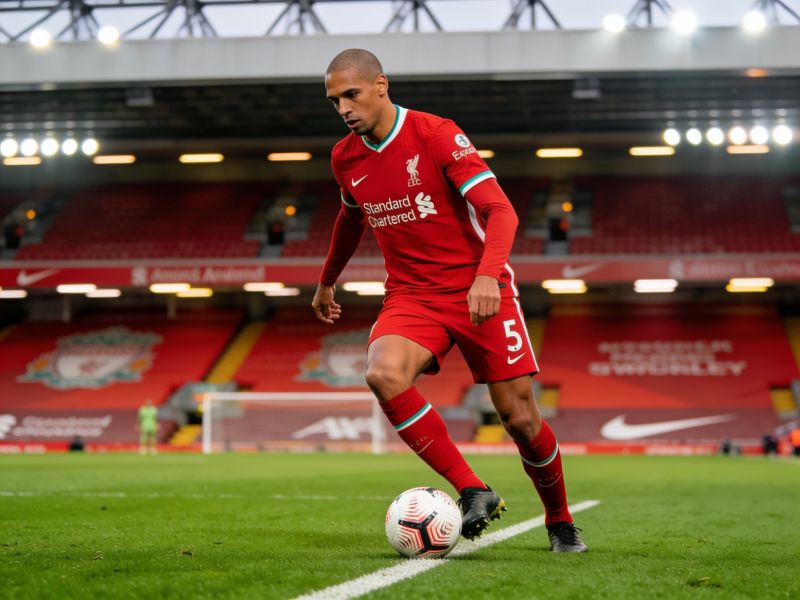
he distributed. The fanbase, initially skeptical of a £44m fee for a relatively low-profile name, quickly warmed to his understated authority.The adaptation wasn’t instant. Klopp eased him in, handing him just three Premier League starts before November. Critics murmured about the pace of English football, but I saw a player learning the rhythms—when to press, when to sit. By December, he was indispensable. His performance in the 3-1 win over Manchester United at Anfield was a masterclass in midfield control: 94 touches, 7 recoveries, and a calmness that infected the entire team. Liverpool sign Fabinho, and suddenly the midfield had a spine. The Brazilian’s presence allowed Klopp to shift Jordan Henderson into a more advanced role and gave Virgil van Dijk a protective screen. The statistics back it up: in Fabinho’s first season, Liverpool conceded just 22 league goals—the joint-best defensive record in the club’s Premier League history. He wasn’t the headline-grabber, but he was the foundation. I’d argue his arrival was more transformative than any attacking signing that summer。because it addressed the structural flaw that had plagued Liverpool in big matches.Off the pitch, Fabinho’s demeanor fit Liverpool’s dressing room like a glove. Teammates describe him as a ‘professor’—quiet, analytical, always watching. He learned English quickly, immersed himself in the city’s culture, and became a fixture at local restaurants (his fondness for Brazilian barbecue is well-documented). That integration matters. Too many foreign signings flounder because they can’t adjust to the Premier League’s intensity or the club’s expectations. Fabinho, by contrast。seemed to absorb it all. When Liverpool lifted the Champions League in 2019, his performance in the final against Tottenham was understated but crucial: four interceptions, three clearances, and a 91% pass accuracy. He didn’t score the goals, but he made the platform for them. Liverpool sign Fabinho and they got more than a footballer;they got a mentality. The club’s subsequent Premier League title in 2020 only reinforced that. His partnership with Georginio Wijnaldum and Henderson became the engine room of a champion side.
Reflecting on the transfer now, it’s easy to see why it ranks among Klopp’s shrewdest moves. No fanfare, no melodrama—just a targeted upgrade that shifted the team’s trajectory. Liverpool sign Fabinho, and the midfield transformed from a liability into a fortress. Of course, injuries have since interrupted his rhythm, and the rise of younger options like Curtis Jones has reshaped the pecking order. But the blueprint remains. In a era where transfer fees spiral and social media hype dictates narratives, Fabinho’s arrival was a reminder that substance beats sizzle. I still think about that first interview he gave—halting English, shy smile。talking about ‘winning titles’. He meant it. And Liverpool, quietly and decisively, gave him the platform to do exactly that.